When corporate HR teams discuss “employee wellness,” the conversation usually gravitates toward gym discounts, mental health tools, or flexible schedules. However, these benefits often fall short for a massive segment of the workforce.
For those operating in healthcare, emergency response, logistics, and hospitality, standard perks miss the mark.
For people working night shifts, the single biggest challenge is the physical and cognitive damage caused by fighting their body’s natural sleep-wake cycle. Sleeping during the day disrupts rest, elevates stress levels, and directly correlates with:
- Higher rates of burnout
- Increased workplace errors
- Spikes in absenteeism
To genuinely support shift workers, HR leaders must move beyond standard wellness programs and zero in on the one factor that dictates their recovery: the physical space where they sleep.
The Business Case: Combatting Shift Work Sleep Disorder (SWSD)
Sleeping during the day is biologically hostile. Daylight and ambient noise constantly interrupt the sleep cycle, frequently robbing shift workers of REM sleep.
This chronic disruption frequently leads to Shift Work Sleep Disorder (SWSD), a recognised circadian rhythm condition characterized by severe insomnia, excessive daytime sleepiness, and a constant feeling of unrefreshing sleep.
When an employee is battling SWSD, losing that critical REM phase where the brain processes emotions, repairs cognitive function, and consolidates memory doesn’t just make them tired. It severely degrades their decision-making, reaction times, and overall safety on the job.
“Sleep hygiene” tips like limiting screen time or drinking chamomile tea are simply not enough for this demographic. Shift workers must actively engineer their bedrooms for recovery, and employers have a duty of care to guide them on how to build a space optimized for daytime rest.
- Building the Perfect Sleep Space
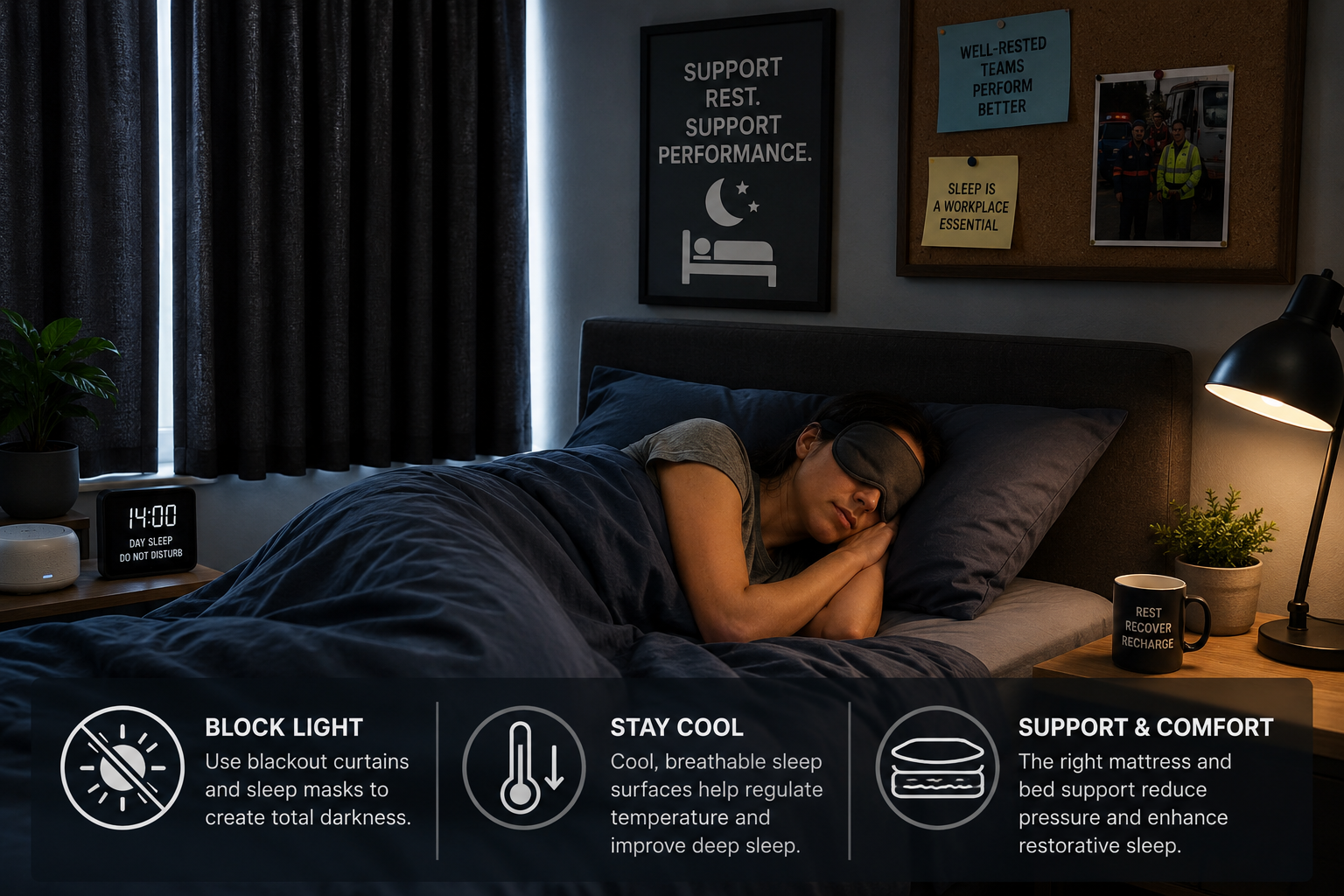
If HR teams want to reduce absenteeism and improve retention among shift workers, they should educate staff on these three essential environmental pillars.
1. Blocking Light (Managing Circadian Disruptions)
The brain interprets sunlight as the clearest biological signal to wake up, immediately suppressing the production of melatonin. Even a sliver of daylight slipping through the curtains can pull a sleeper out of a deep cycle and ruin their rest.
The Solution: Shift workers require a 100% dark environment. HR should recommend investing in high-quality blackout blinds, paired with heavy, dark curtains to seal the edges. Adding a contoured sleep mask provides an excellent secondary defence against light intrusion.
2. Thermal Regulation and the Heat Problem
At night, the human body naturally cools down to initiate and maintain sleep. Recreating this temperature drop during the afternoon is incredibly difficult, as homes and outdoor temperatures are typically at their peak around 2:00 PM.
Many workers inadvertently worsen this by sleeping on traditional memory foam mattresses. While traditional foam offers great pressure relief, it is notorious for absorbing and trapping body heat. For a daytime sleeper, this creates a stifling micro-climate that leads to sweating and frequent waking.
The Solution: The sleep surface must actively dissipate heat. Gel mattresses are the definitive fix for this issue. Cooling gel particles infused into the foam allow the mattress to retain its pressure-relieving qualities while actively drawing excess heat away from the sleeper. When paired with breathable open-cell structures or pocket-sprung bases that promote airflow, gel technology ensures the sleeping surface remains cool, preventing overheating.
3. Balanced Comfort and Support
Because daytime sleep is already at a biological disadvantage, physical discomfort cannot be allowed to create an additional hurdle. A worn-out, sagging mattress that exacerbates pressure points will completely derail the brief window of rest a shift worker has available.
The Solution: A hybrid approach often yields the best results. Combining the targeted spinal support of individual pocket springs with a top layer of cooling gel offers solid orthopaedic support without the heat retention of standard foam.
Actionable Steps for HR: Creating a “Rest-Focused” Culture
To drive real change, HR departments and personnel managers can implement practical steps to help shift workers upgrade their sleep sanctuaries:
- Review and Educate: Provide your team with actionable checklists to assess their bedroom’s lighting, noise, and temperature. For an ongoing educational resource, direct your staff to the Bedstar Sleep Talk blog, which offers deep dives into sleep cycles, the importance of REM, and practical recovery strategies.
- Implement Sleep Budget Perks: Just as companies subsidize ergonomic office chairs or standing desks for remote employees, forward-thinking HR teams should consider an annual allowance for sleep environment upgrades. Employees could use this for blackout curtains, white noise machines, or cooling bedding.
- Establish Team Discounts: Partner with trusted sleep experts and retailers to offer your staff special corporate deals on essential heavy hardware, such as temperature-regulating gel mattresses or supportive bed frames.
Well-rested shift workers bring undeniable operational benefits: they make fewer critical errors, take fewer sick days, and exhibit much higher job satisfaction. It is time for employers to start treating the sleep environment as the essential workplace tool it truly is.