
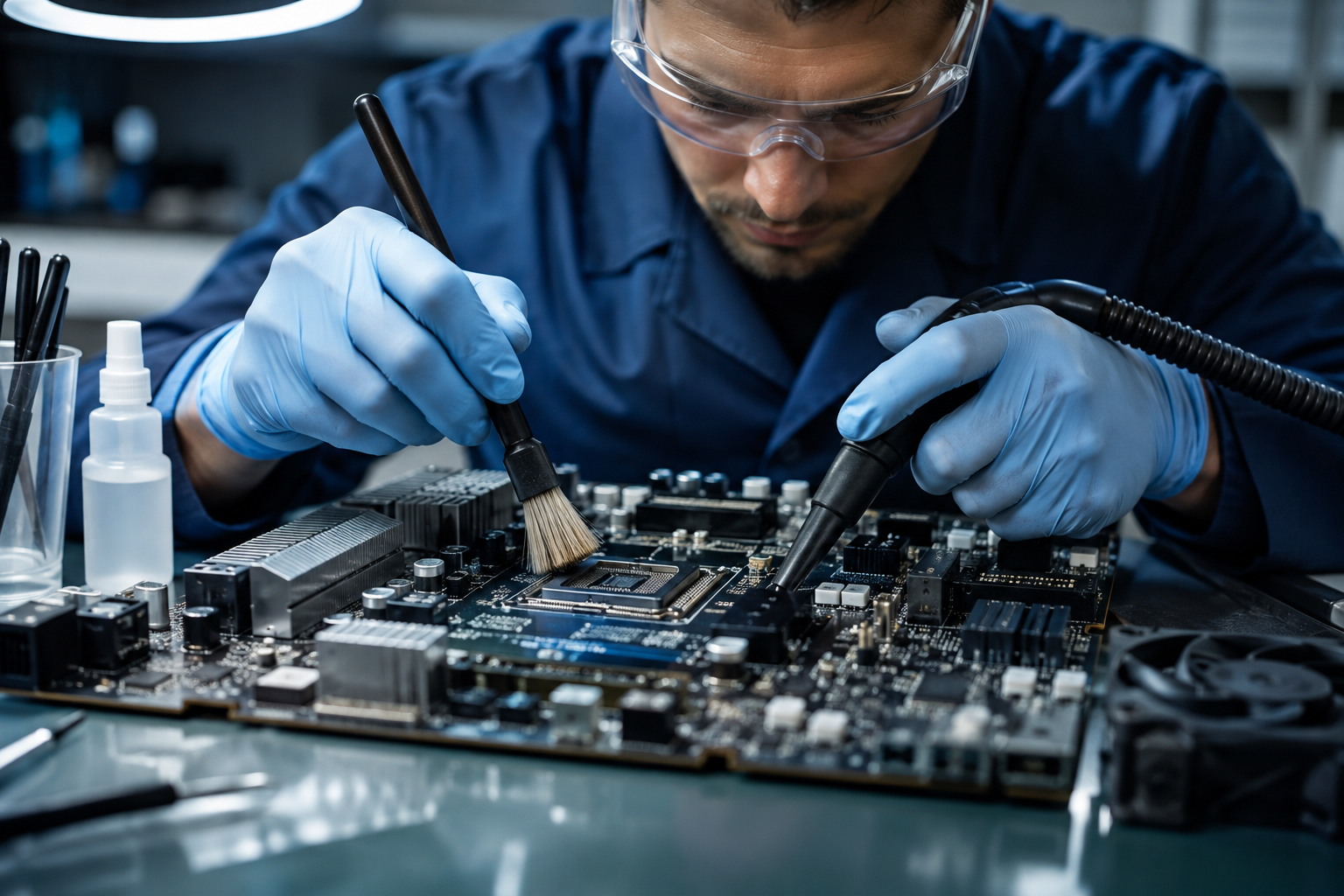
Precision cleaners, degreasers, and contact cleaners will always be among the most important electronic equipment maintenance solutions.
However, investing in such products is only one of the important steps for maintaining such equipment and keeping it clean.
That’s because knowing exactly how to use specialised items like these is also crucial.
Proper Device Cleaning: Much More Than A ‘Nice to Do’
It can be easy for some observers to presume that cleaning is a merely “surface” or superficial matter. However, this is far from the case.
The adequate cleaning of devices such as office computers, servers, consumer gadgets, and precision machinery can be one of the simplest and most cost-effective ways to extend equipment lifespan, preserve its reliability, and minimise costly downtime.
In this article, then, we will consider what makes a high standard of cleaning so imperative for electronic equipment, the steps you can take to accomplish it, and other vital elements to know.
Why Does the Right Cleaning Approach Matter So Much for Electronic Equipment?
We should probably split this query into two parts: firstly, why the proper cleaning of electronic devices is so important at all, and secondly, why you shouldn’t adopt “just any old” random or generic cleaning approach to such equipment.
To address the first of those questions: electronic components are highly sensitive. If only small amounts of dust get into the crevices of electronic systems and devices, they can act as insulators, trapping heat and forcing components to work harder. Contaminants can also accelerate wear over time.
So, if you don’t wish for the electronic equipment under your control to suffer from such issues as performance degradation, overheating, short circuits, failures, and/or higher running costs in the longer term, you must keep up with routine cleaning.
To answer the second question that we posed above: when it comes to cleaning electronic gadgets or machinery, you can’t depend on simply wiping them down with water or household cleaning products.
Moisture and unsuitable chemicals can lead to such undesirable consequences as damaged circuitry, corrosion, or conductive residues being left on the equipment. So, you can expect to need to invest in specialist electronics cleaners that have been designed to safely remove contaminants from electronic components and devices.
5 Best Practices for Safe and Effective Cleaning
Adhering to a consistent maintenance routine can greatly help keep your electronic equipment reliable. It is crucial to always prioritise safety and to follow manufacturer guidelines.
Here is a practical step-by-step approach for successful cleaning:
- Power Down and Disconnect
Turn off and unplug all equipment. Don’t forget, too, to discharge any capacitors where this may be necessary for high-voltage items. Such steps will help prevent electrical hazards and damage from liquids.
- Remove Loose Debris
Use compressed air dusters or anti-static brushes for the non-contact cleaning (in other words, the removal of dirt without physical scrubbing) of keyboards, vents, circuit boards, and crevices. Avoid household vacuums, as these can generate static.
- Carry Out Targeted Cleaning
For the cleaning of screens and surfaces, it is advisable to use microfibre cloths lightly dampened with distilled water or approved screen cleaners. Disinfection of such surfaces can be achieved with 70% isopropyl alcohol (IPA) solutions.
When contacts and components need to be cleaned, the recommended course of action is to use specialist electronics cleaners or degreasers.
- Dry Thoroughly
Allow all surfaces to dry completely before reconnecting power. The use of fast-evaporating cleaners will help shorten periods of downtime.
- Protect And Maintain
Once cleaning is done, you might consider the application of a protective coating to guard against future corrosion. This can be an especially relevant solution in more challenging environments.
Are There Any Things You Particularly Shouldn’t Do When Cleaning Electronics?
Yes; you should never use household cleaners containing water, bleach, or abrasives directly on sensitive electronics.
We also haven’t suggested the use of paper towels at any point in our aforementioned advice, given the scope for these to scratch surfaces.
Remember, as well, to ensure a high level of ventilation in the given space before you begin cleaning with any solvent-based products.
Conclusion: The Right Cleaning Approach Is a Crucial Investment
When you put the right regime in place for the cleaning of electronic equipment at your site, you will be going a long way to bolstering the longevity of such devices and gadgets. It will also simply be the right move for your peace of mind.
Using well-chosen, specialist cleaning products and appropriate techniques as part of a broader proactive maintenance strategy, you can help lower waste, drive down costs, and support smoother operations at your premises.


