
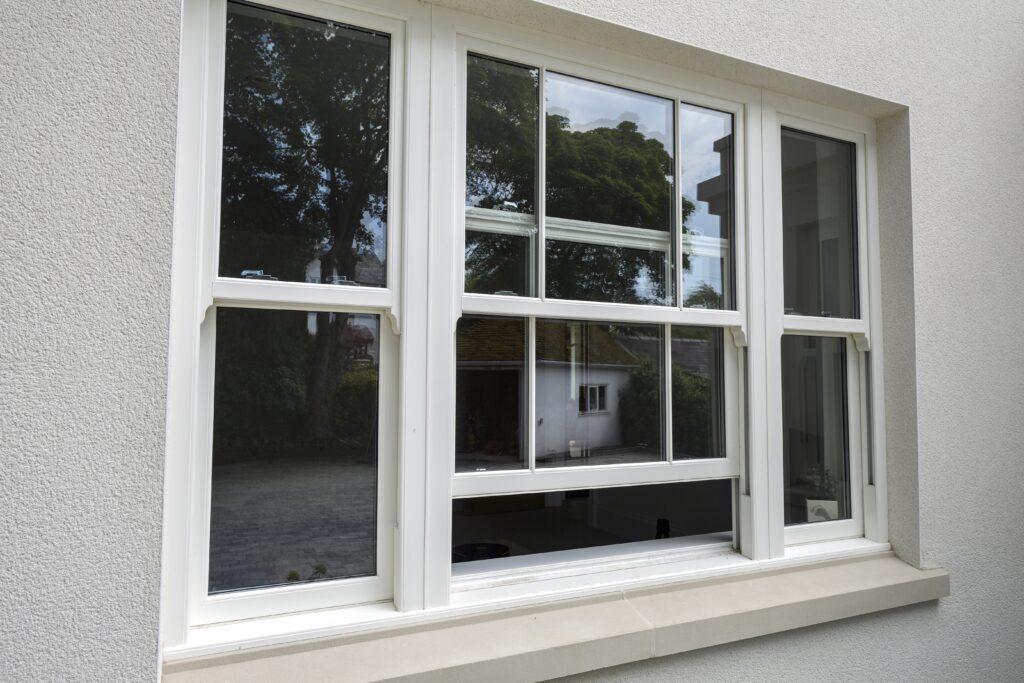
Construction businesses rarely lose money because of one major decision. More often, it’s the accumulation of smaller issues, a planning condition here, a ventilation requirement there, or a finish the client rejects at second fix, that gradually eats into programme, profit and productivity. That’s why building products are increasingly judged on how well they remove those pressures before they ever reach site.
The uPVC vertical sliding sash window is a key example. A product rooted in Georgian and Victorian architecture is now being redesigned around the realities of modern construction, and the way manufacturers are approaching that evolution reflects a wider shift across the construction supply chain.
A traditional product category under modern pressure
Demand for sash windows hasn’t gone away. Period homes make up a significant part of the UK’s housing stock, conservation-sensitive refurbishments remain popular, and many new-build developments are designed to complement established streets rather than contrast with them. In each case, window style is often one of the first things a planner, a purchaser or a neighbour notices.
The pressure comes from everything else the product now has to do. Background ventilation requirements, security features, low maintenance expectations and the need for consistent quality across multi-plot orders have all raised the bar. A window that only looks right is no longer a complete answer.
Specification confidence as a commercial issue
For contractors and developers, specification is a risk decision as much as a design one. Choosing a product means it needs to meet or even exceed building requirements, satisfy the client’s style choices, install without complications and still perform years down the line.
That is why product development in this sector has focused on providing consistently excellent results. Quickslide, one of the UK’s leading manufacturers of uPVC sliding sash windows, has built its Brighouse manufacturing operation around exactly this brief: traditional-style products engineered so that compliance, security readiness and finish consistency are resolved before anything reaches site.
Solving the ventilation question without visual cost
Background ventilation is a good example of the balancing act manufacturers now face. As homes are built to be more airtight, controlled ventilation becomes a compliance requirement rather than an optional extra. Yet the standard solution, a visible trickle vent, sits awkwardly on a window whose entire purpose is period authenticity.
Concealed head vents resolve that conflict at the design stage. Quickslide’s concealed head vent was developed with fitters in mind: the canopy clips into position and sits atop the frame once installed, so the ventilation requirement is met without a visible component disturbing the window sash. The commercial point is subtle but real. A detail like this removes a conversation a contractor would otherwise have to have with a conservation officer, an architect or an unhappy client.
Finish, flexibility and client expectations
Refurbishment and heritage-inspired projects often depend on whether a modern product can convincingly match its surroundings, and finish is often where that final judgement is made. Chalk White is a great example: a soft, classic shade that helps a uPVC sash read as a traditional window rather than a modern replacement. For specifiers, having dependable finish options can reduce the need for repeated samples, simplify matching across multiple project phases and minimise the risk of late-stage client objections.

Smart security as a specification talking point
Security has traditionally been a hardware discussion. It’s now becoming a technology-focused one. Quickslide’s Legacy Protect sliding sash window has been designed to work with Kubu smart security sensors. From mid-2026, compatible magnets are built discreetly into the frame during manufacture, and pre-defined sensor positions on the sash, making installation straightforward when homeowners choose to activate the smart features.
The approach keeps things simple for the trade. Kubu sensors let a homeowner see in the Kubu app whether a window has been left open or is securely closed, and the homeowner buys them directly from Kubu rather than through the builder. Installers can offer an additional feature without taking on extra stock or a more complex installation.
Manufacturing partnerships and dependable delivery
Ultimately, construction businesses buy from manufacturers, not product brochures. Reliable lead times, accurate orders, responsive customer support and continued product development often have a greater impact on project success than any single product feature.
Industry recognition tends to follow the firms that behave this way, and the fact that Quickslide has been shortlisted for Manufacturing Partner of the Year at the Architects Awards reflects how highly the sector now values partnership qualities alongside product ones.
The wider lesson for construction businesses
The sash window story carries a lesson that applies well beyond fenestration. Traditional product categories survive in modern construction when manufacturers take on the awkward details, ventilation compliance, security readiness, finish matching, installation preparation, so that builders, developers and installers do not have to solve them on site. Products that simplify the work needed, while protecting the design character that created the demand in the first place, are the ones that keep earning their place on the specification sheet.