
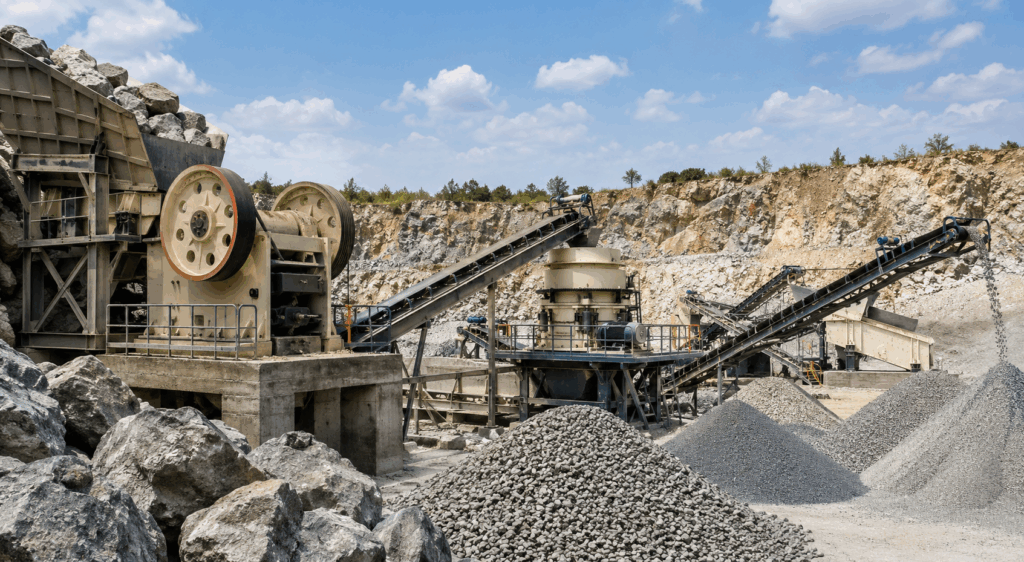
Turning quarried rock into a saleable product rarely happens in one pass. Most crushing circuits work through a series of stages, and each one takes the material a step closer to the size and shape you need. Getting to grips with how these stages fit together helps you plan a plant that runs well and gives you a steady output.
This guide breaks down the three main crushing stages and shows how they connect. Whether you run a quarry, a recycling site, or a mineral processing operation, knowing the role each stage plays makes it much easier to pick the right setup.
Why Crushing Happens in Stages
Feeding a huge boulder straight into a machine built for fine material would block it in seconds. Crushing in stages gets around this by reducing material bit by bit. Each stage takes a smaller feed size than the last, which protects the equipment, keeps throughput steady, and gives you tighter control over the finished product.
A staged approach also spreads the wear across several machines rather than punishing one. That means less downtime and lower running costs over the life of the plant.
Primary Crushing
Primary crushing is the first and heaviest stage. This is where raw material straight from the blast or the dig gets its first reduction. Feed sizes here can be massive, so the machines need real power and a big opening to take large lumps.
What Primary Crushers Do
The job at this stage is simple. Take large rock and break it down into pieces small enough for the next machine to handle. Output tends to be coarse, often around 150mm to 300mm, depending on the material and the settings.
Jaw Crushers at the Primary Stage
Jaw crushers are the usual pick for primary work. They handle large feed sizes with strong reduction ratios and cope well with hard, abrasive rock. Their build suits the rough conditions of a working quarry, where reliability counts for more than a fine finish.
Secondary Crushing
Once material has passed through the primary stage, it moves on to secondary crushing. The pieces are already smaller here, so the machines can focus on shaping and refining rather than sheer force.
Reducing Material Further
Secondary crushers take the coarse output from the first stage and bring it down to around 20mm to 50mm. This stage starts to produce material that looks closer to a finished aggregate, with a better shape and a more even size.
Cone Crushers at the Secondary Stage
Cone crushers come into their own at this point. They give a uniform product and cope well with a steady, medium feed. For softer or recycled material, impact crushers also do a good job here, producing a well shaped product with good consistency. When you are choosing aggregate crushing equipment, the secondary stage is often where the shape of your final product is decided.
Tertiary Crushing
Tertiary crushing is the final stage, and it is all about precision. By now the material is small and the focus shifts to producing a clean, well graded product that meets tight specs.
Producing the Finished Product
At this stage you are chasing exact sizes, often below 20mm, along with a good cubical shape. This is the aggregate that ends up in concrete, asphalt, and other demanding jobs where shape and grading really matter.
The Right Machine for a Fine Finish
Cone crushers set to a fine gap handle much of the tertiary work, while impact crushers suit jobs where shape is the priority. Some operations add extra screening between stages to send oversized material back for another pass, keeping the final product tight to spec. Pairing the right crusher with the right aggregate screening equipment is often what separates a good circuit from a great one.
Building a Crushing Circuit That Works
The three stages rarely work on their own. Screens, conveyors, and feeders link them together into a single flowing circuit. Material moves from the crusher to the screener and back again until it hits the target size, with oversized pieces sent around again rather than wasted.
Getting the balance right takes experience. Feed rates, machine settings, and the order of operations all shape the output and the running cost. A well-planned circuit keeps every machine working within its limits, which cuts wear and keeps production steady.
Get the Right Setup for Your Site
Every site is different, so the best mix of primary, secondary, and tertiary machines comes down to your material, your capacity, and your output goals. Whether you are buying new, buying used, or hiring, matching the equipment to the job is what keeps a plant profitable.
Take the time to plan your circuit properly and you will spend less on wear parts, waste less material, and produce a product that meets spec load after load.