
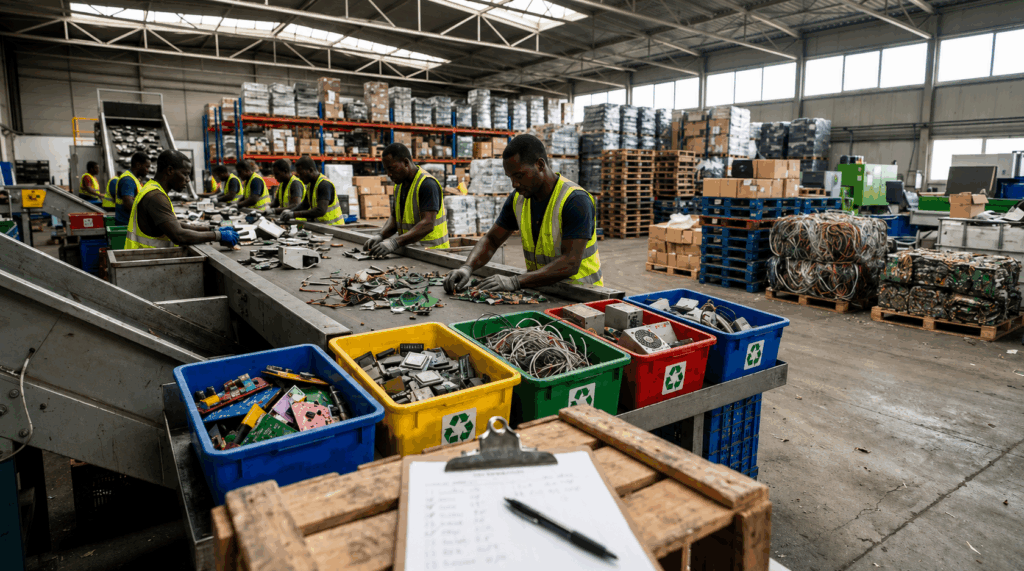
Electronic waste compliance has become a defining element of corporate social responsibility programs in 2026, as regulators worldwide tighten obligations for manufacturers, importers, and distributors of electrical and electronic equipment. Companies that once treated end of life product management as an afterthought now face registration requirements, reporting deadlines, and recycling contributions that directly affect operating budgets. For sustainability leaders, the challenge is no longer whether to comply, but how to manage the associated costs without undermining broader environmental commitments. Balancing financial discipline with genuine environmental responsibility requires a clear understanding of where compliance costs originate, how they scale with business growth, and which strategies reduce administrative burden while maintaining full legal standing across every market where products are sold.
The Business Case for Electronic Waste Compliance in CSR Strategy
Treating electronic waste compliance as a strategic CSR pillar, rather than a legal afterthought, protects both reputation and revenue. Companies that integrate compliance planning into their sustainability roadmap avoid the reactive scramble that typically drives up costs when deadlines are missed or registrations lapse.
Regulatory Risk and Reputational Exposure
Non compliance with electrical waste regulations exposes companies to fines, sales bans, and public scrutiny. Authorities in many jurisdictions now publish lists of non compliant producers, which can damage brand trust among consumers and business partners alike. A single enforcement action often costs more, in both financial and reputational terms, than years of properly budgeted compliance fees.
Compliance as a Competitive Differentiator
Buyers, investors, and retail partners increasingly evaluate suppliers on environmental accountability. Demonstrating a mature approach to electronic waste compliance can open doors to procurement contracts that explicitly require proof of environmental registration, giving compliant companies a measurable edge over competitors that treat the obligation as optional.
Understanding the Cost Structure of Electrical Waste Compliance
Electrical waste compliance costs fall into two broad categories: direct financial obligations tied to regulatory processes, and indirect costs generated by internal resourcing. Recognizing both categories is essential for accurate budgeting.
Direct Fees: Registration, Reporting, and Recycling Contributions
Direct costs typically include national registration fees, annual reporting charges, and per unit recycling contributions calculated by product category and weight. These fees vary significantly by country and product type, and they often scale with sales volume, meaning that rapid market expansion can quietly multiply compliance expenses if not tracked closely.
Indirect Costs: Administrative Burden and Staff Time
Beyond direct fees, companies bear the cost of internal staff time spent tracking regulatory changes, preparing declarations, and managing documentation across multiple markets. For businesses selling in several countries, this administrative layer frequently exceeds the direct fees themselves, particularly when compliance is handled manually rather than through structured processes.
Global Regulatory Frameworks Shaping Compliance Obligations
Electronic waste regulation is built on a shared principle applied differently across jurisdictions: producers bear responsibility for the products they place on the market, from manufacture through disposal.
Extended Producer Responsibility Principles
Extended producer responsibility shifts the financial and physical burden of end of life product management from municipalities to the companies that manufacture or import electrical goods. This principle underpins most modern electronic waste frameworks and requires producers to finance collection, treatment, and recycling infrastructure proportional to what they place on the market.
Cross Border Compliance Challenges for Multinational Companies
Companies operating across several countries must navigate a patchwork of national implementations built on the same underlying framework. Within Europe, compliance obligations set out under the EU weee Directive require producers to register in each member state where they sell electrical or electronic equipment, rather than relying on a single continental registration. This decentralized structure means that a product line sold in a dozen markets can generate a dozen separate sets of reporting deadlines, recycling targets, and local fee schedules, making centralized tracking systems essential for cost control.
Integrating Electronic Waste Compliance into Corporate Sustainability Reporting
Compliance data generated through electrical waste management processes provides valuable raw material for broader sustainability disclosures, yet many companies fail to connect the two functions.
Aligning with ESG Frameworks
Recycling volumes, collection rates, and material recovery figures collected for regulatory reporting can feed directly into environmental, social, and governance disclosures. Aligning compliance data with ESG reporting frameworks reduces duplicated effort and strengthens the credibility of sustainability claims made to investors and stakeholders.
Measuring and Communicating Impact
Quantifiable metrics such as the percentage of products designed for recyclability, or the tonnage of electronic waste diverted from landfill through producer funded programs, translate compliance activity into tangible CSR outcomes. Communicating these figures transparently builds stakeholder confidence and demonstrates that compliance spending generates measurable environmental value rather than existing purely as a regulatory cost center.
Practical Strategies to Control Compliance Costs
Companies that manage electronic waste compliance most efficiently tend to follow a consistent set of operational practices rather than addressing obligations market by market as they arise.
- Centralize registration tracking across all markets to avoid duplicate filings and missed renewal dates.
- Classify products accurately according to local category definitions, since misclassification often leads to overpayment or compliance gaps.
- Review recycling fee structures annually, as contribution rates and calculation methods change frequently across jurisdictions.
- Build compliance checkpoints into product design and procurement decisions, since material choices affect end of life recycling costs.
- Consolidate reporting through a single internal or outsourced process to reduce the administrative time spent per market.
Applying these practices consistently allows sustainability and finance teams to forecast compliance spending with far greater accuracy, turning a historically unpredictable cost center into a manageable, plannable line item within the annual CSR budget.
Frequently Asked Questions (FAQ)
What is the main cost driver in electronic waste compliance?
Recycling contribution fees, calculated per unit sold and weighted by product category, typically represent the largest recurring cost, followed by administrative expenses related to multi market registration and reporting.
How does electronic waste compliance connect to broader CSR goals?
Compliance data on recycling rates and material recovery directly supports environmental disclosures, allowing companies to demonstrate measurable sustainability outcomes rather than relying on general commitments.
Can smaller companies reduce the administrative burden of compliance?
Yes, smaller companies often benefit from consolidating registrations, standardizing product classification early, and reviewing fee structures annually to avoid unnecessary overpayment as sales volumes grow.