Is London safe? Short answer: yes, for the vast majority of visitors. Millions of tourists pass through every year without incident, and violent crime against visitors is genuinely rare. But London is also big, fast-moving and crowded, and the risks that catch tourists out usually aren’t the dramatic ones you’d expect they’re the small, easy-to-miss habits that locals know instinctively and visitors don’t. Here are nine of them, and how to sidestep each one.
1. Phone snatching by moped and e-bike riders
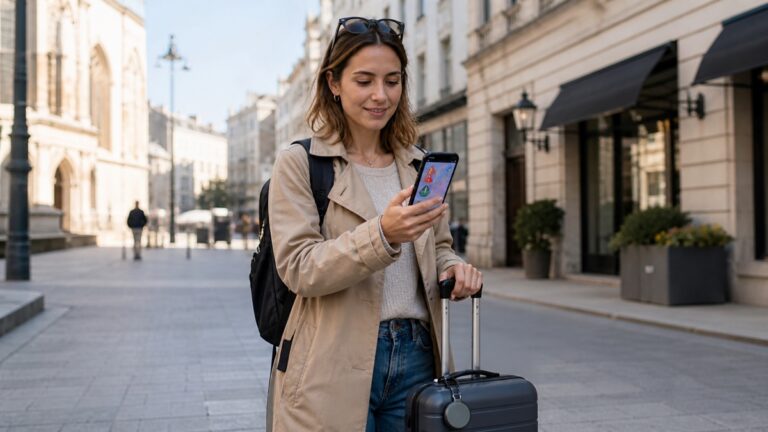
This is the one most tourists genuinely don’t see coming. Phone theft has surged dramatically in London in recent years, with the Metropolitan Police recording over 80,000 mobile phone theft and robbery incidents in a single recent year a sharp rise on the year before. The method is almost always the same: a rider on a bike, e-bike or moped mounts the pavement or swings close to the kerb and grabs the phone straight out of your hand, often while you’re mid-text or checking a map. Westminster, Camden and the South Bank see the highest concentrations. Most snatches happen in the early evening through to the early hours, but daytime thefts do happen too.
Avoid it: Don’t use your phone near the kerb. Step back against a wall or shopfront if you need to check directions, keep your phone on silent “eyes-up” mode, and consider turning off the lock screen preview so a stolen phone can’t be instantly accessed.
2. Unlicensed minicabs outside stations and venues
Every visitor knows London’s black cabs and app-based rides are safe. Fewer know that unbooked minicabs touting for business outside clubs, stations and restaurants are illegal and genuinely dangerous. The Metropolitan Police is explicit that getting into an unbooked car carries real risk of assault or robbery, since there’s no record of the driver, vehicle or journey.
Avoid it: Only ever use a licensed black cab hailed in the street, or pre-book through a licensed operator or app. If a driver approaches you rather than the other way round, walk away.
3. Distraction pickpocketing in crowds, not “dodgy” areas
Tourists often assume theft happens in rough neighbourhoods. In London, it’s the opposite pickpockets work the busiest, most respectable-looking spots: Oxford Street, Leicester Square, Camden Market, and packed Tube carriages at rush hour. The technique relies on distraction: a bump, a dropped item, someone asking for directions, a street game inviting you to bet. While you’re engaged, a second person lifts a wallet or phone from a bag or pocket.
Avoid it: Keep bags zipped and worn across the front of your body in crowds. Be politely wary of anyone who initiates unsolicited contact in a busy tourist spot, however friendly.
4. Fake plain-clothes “police officers”
A less common but well-documented scam involves someone claiming to be a police officer, often in plain clothes, asking to search a bag or check cash for counterfeit notes. It’s a con designed to get valuables out in the open.
Avoid it: A genuine officer will show identification and won’t mind you calling 101 to verify them on the spot. Never hand over a bag, wallet or passport to someone you can’t verify.
5. Rickshaws and pedicabs
They look like a fun, quirky way to see the sights, but unregulated rickshaws (pedicabs) have a reputation for landing tourists with wildly inflated fares sometimes agreed vaguely beforehand, then demanded aggressively at the end of a short ride.
Avoid it: Agree an exact, all-in price in writing or on your phone before getting in, or skip them altogether in favour of the Tube, bus or a licensed cab.
6. Drink spiking in bars and clubs
It’s rarely mentioned in glossy travel guides, but spiking of drinks and, increasingly, drinks left unattended even briefly — is a recognised risk in London’s nightlife districts, particularly around Soho, Shoreditch and Camden on weekend nights.
Avoid it: Never leave a drink unattended, buy your own drinks where possible, and agree a check-in point or time with your group in advance in case anyone gets separated.
7. Empty Tube carriages and night buses
An empty carriage might look like a lucky escape from rush-hour crowds, but it’s actually a higher-risk choice late at night, since there are fewer witnesses around. The same logic applies to sitting upstairs alone on a night bus.
Avoid it: Choose a carriage with other passengers, and on night buses, sit downstairs near the driver where possible.
8. Looking the wrong way before crossing
This one isn’t crime-related, but it sends more tourists to A&E than almost anything on this list. Visitors from right-hand-drive countries instinctively look left first the opposite of what London traffic requires. Painted “LOOK RIGHT” warnings on central London pavements exist for exactly this reason, but they’re easy to miss when you’re distracted by a map or a skyline.
Avoid it: At every crossing, pause and consciously check both directions, especially near bus lanes and cycle superhighways, which don’t always follow the pattern you’d expect.
9. Getting caught up in large-scale protests
London sees frequent large political demonstrations, and central London can see road, bus and even Tube station closures around Whitehall, Westminster, Trafalgar Square and embassy districts when marches happen. Getting boxed into a “kettled” crowd can mean being held in one spot for hours with no way through. The practical risk for tourists is mostly logistical and legal rather than physical.
Current advisory — as of 12 August 2026: Central London has had a particularly active run of large demonstrations through 2026, including pro-Palestinian marches and national coalition rallies drawing crowds in the thousands. Since the UK government’s proscription of the group Palestine Action as a terrorist organisation in 2026, displaying certain placards or symbols in support of it has been a criminal offence, and this has led to hundreds of arrests at individual events a legal risk that has applied to bystanders and photographers, not just organisers. This situation is actively evolving; check the Metropolitan Police’s and TfL’s official channels for the current state of any planned demonstrations before you travel, rather than relying on this paragraph, which will age.
Avoid it: Check TfL’s live travel updates and the Met Police’s demonstration alerts before heading into central London on a weekend. If you walk into an unexpected march, don’t attempt to push through or linger to film it head to the nearest side street and reroute. Treat any protest signage or symbols you don’t recognise with caution rather than photographing or holding them out of curiosity.
So, is London safe for tourists?
None of these risks should put you off visiting. London’s overall crime rate sits below several other major UK and European cities, and the overwhelming majority of visits pass without a single problem. The pattern across almost all nine risks here is the same: stay aware of your surroundings, keep valuables secured and out of sight, use only licensed transport, and trust official sources over street-level offers. Do that, and London remains one of the safest, most walkable major capitals in the world to explore.